English
 Español
 عربى
عربى

How does the surface roughness of the substrate affect the adhesion and grain clarity of wood grain heat transfer film during hot stamping?
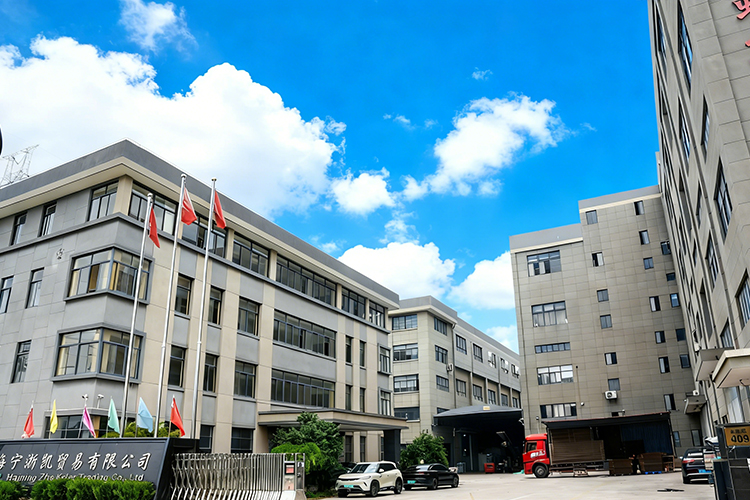
In the hot stamping process of wood grain heat transfer film, substrate surface roughness is a critical parameter that directly determines both adhesion strength and pattern clarity. Haining Zhe Keler Trading Co., Ltd. (the subsidiary company of Haining Keler Decoration Materials Co., Ltd.) has extensive experience in optimizing this relationship across various substrate materials.
Haining Zhe Keler Trading Co., Ltd. is located in Yuanhua Town, Haining City, in the Greater Hangzhou Bay Area. The company specializes in producing high-quality thermal transfer film, cold transfer film, UV transfer film, and composite film. With products sold in over 30 major cities nationwide and exported to Europe, America, the Middle East, South America, and Southeast Asia, Zhe Keler has established a comprehensive after-sales service system adhering to "focusing on customer interests" and "dedicated to solving practical problems for customers."
1. The Physical Mechanism: Roughness Impact on Transfer Quality
Substrate surface roughness (measured in Ra μm or Rz μm) affects wood grain transfer through two primary mechanisms:
- Adhesion effect: Optimal roughness creates mechanical interlocking between the wood grain PET heat transfer film adhesive layer and substrate surface, enhancing bonding strength.
- Grain clarity effect: Excessive roughness causes incomplete contact during hot stamping, resulting in micro-voids that scatter light and blur wood grain details.
2. Parameter Comparison: Surface Roughness Ranges and Transfer Results
The following table illustrates recommended substrate roughness parameters for different applications based on Haining Zhe Keler Trading Co., Ltd.'s production data:
| Substrate Material | Recommended Ra (μm) | Adhesion Rating (1-5) | Grain Clarity Rating | Typical Application |
|---|---|---|---|---|
| PVC Profile (Smooth) | 0.2 - 0.5 | 3 (Moderate) | 5 (Excellent) | Interior door frames |
| PVC Profile (Matte) | 0.8 - 1.2 | 4 (Good) | 4 (Good) | Window frames, skirting |
| WPC (Wood-Plastic Composite) | 1.5 - 2.5 | 5 (Excellent) | 3 (Fair) | Outdoor decking, flooring |
| Aluminum (Pre-treated) | 0.5 - 1.0 | 4 (Good) | 4 (Good) | Furniture trim, profiles |
| MDF (Medium Density Fiberboard) | 1.0 - 2.0 | 5 (Excellent) | 3 (Fair) | Panel furniture, cabinetry |
3. Optimal Roughness Range for Wood Grain Transfer
Based on Haining Zhe Keler Trading Co., Ltd.'s extensive testing, the optimal substrate surface roughness for wood grain heat transfer film is:
- For fine wood grain patterns (oak, cherry, walnut): Ra = 0.3 - 0.8 μm
- For medium wood grain patterns (pine, ash, beech): Ra = 0.5 - 1.2 μm
- For rustic/open grain patterns (teak, oak heavy grain): Ra = 0.8 - 1.8 μm
When substrate roughness falls outside these ranges, specific corrective measures are required to maintain transfer quality.
4. Defect Analysis: Roughness-Related Issues
- Too smooth (Ra < 0.2 μm): Insufficient mechanical anchorage leads to poor adhesion. The wood grain pattern may peel off during edge trimming or flexing.
- Optimal range (Ra 0.3-1.2 μm): Balanced adhesion and clarity. The adhesive flows into micro-cavities while maintaining surface contact for pattern transfer.
- Too rough (Ra > 2.0 μm): Air entrapment creates micro-voids that appear as white spots or blurred grain lines. The hot stamping pressure cannot fully conform to deep valleys.
5. Corrective Solutions for Non-Optimal Substrates
Haining Zhe Keler Trading Co., Ltd. provides technical guidance for substrates with non-ideal roughness:
- For overly smooth substrates: Apply primer coating or perform corona treatment to increase surface energy and effective roughness.
- For overly rough substrates: Use a thicker adhesive layer (increase by 20-30%) or apply a sanding/sealer coat before hot stamping.
- For variable roughness across batches: Adjust hot stamping pressure (increase by 0.5-1.0 kg/cm²) and temperature (increase by 5-10°C) to improve adhesive flow.
Frequently Asked Questions (FAQ)
FAQ 1: What substrate surface roughness testing methods does Haining Zhe Keler Trading Co., Ltd. recommend for wood grain heat transfer film applications?
Haining Zhe Keler Trading Co., Ltd. recommends using a contact profilometer or portable roughness tester to measure Ra (arithmetical mean roughness) and Rz (average maximum height). For quality control, measure at three points per substrate panel (center and both edges). The company provides free roughness consultation services at its Yuanhua Town facility, where customers can submit substrate samples for compatibility testing before production. Zhe Keler's technical team will issue a detailed report with recommended hot stamping parameters based on actual roughness measurements.
FAQ 2: Can the same wood grain heat transfer film be used on substrates with different roughness levels?
Yes, Haining Zhe Keler Trading Co., Ltd. offers multi-substrate optimized wood grain PET heat transfer film grades specifically designed for variable substrates. The standard film works well on substrates with Ra between 0.3-1.5 μm. For applications requiring broader roughness tolerance (Ra 0.2-2.5 μm), Zhe Keler recommends the "Universal Grade" wood grain film featuring a 25% thicker adhesive layer and modified hot melt formulation. Contact the company's sales team for substrate-specific product recommendations based on your actual production conditions.
FAQ 3: How does Haining Zhe Keler Trading Co., Ltd. ensure consistent wood grain clarity when customers use rough textured substrates?
Haining Zhe Keler Trading Co., Ltd. has developed a proprietary micro-replicated adhesive technology for challenging rough substrates. This technology uses a specialized adhesive layer that conforms to surface irregularities up to Rz = 25 μm while maintaining a flat transfer interface for the wood grain pattern. The company's comprehensive after-sales service includes on-site technical support to optimize hot stamping parameters (pressure: 5-7 kg/cm², temperature: 160-190°C, speed: 10-15 m/min) for rough substrates. Zhe Keler guarantees minimum 90% grain clarity retention even on substrates with Ra up to 2.5 μm when following recommended parameters.
How does the heat resistance and migration resistance of wood grain PET heat transfer film impact its long-term performance on WPC (Wood-Plastic Composite) and PVC building profiles under UV exposure?
For architectural applications such as window frames, decking, and exterior cladding, wood grain PET heat transfer film must withstand prolonged UV radiation, temperature fluctuations, and chemical migration from the substrate. Haining Zhe Keler Trading Co., Ltd. (the subsidiary company of Haining Keler Decoration Materials Co., Ltd.) has developed specialized formulations that address these durability challenges for WPC and PVC building profiles.
Haining Zhe Keler Trading Co., Ltd. is located in Yuanhua Town, Haining City, in the Greater Hangzhou Bay Area. The company specializes in producing high-quality thermal transfer film, cold transfer film, UV transfer film, and composite film. With products sold in over 30 major cities nationwide and exported to Europe, America, the Middle East, South America, and Southeast Asia, Zhe Keler has established a comprehensive after-sales service system adhering to "focusing on customer interests" and "dedicated to solving practical problems for customers."
1. Understanding Heat Resistance and Migration Resistance
Two critical performance parameters determine the long-term durability of wood grain PET heat transfer film on building profiles:
- Heat resistance: The ability to maintain adhesion, color stability, and film integrity under elevated service temperatures (typically 40-80°C for exterior applications).
- Migration resistance: The ability to prevent plasticizers, stabilizers, and other additives from migrating from the WPC or PVC substrate into the transfer film layer, which can cause discoloration, adhesion loss, or surface defects.
2. UV Exposure Impact Mechanisms
Under prolonged UV exposure (simulating 1-5 years of outdoor service), three degradation pathways occur:
- Thermal-oxidative degradation: UV radiation generates heat that accelerates polymer chain scission in the adhesive layer.
- Plasticizer migration: UV-induced heating increases plasticizer mobility in PVC/WPC substrates, leading to blooming on the transfer film surface.
- Pigment fade: Poor heat resistance causes wood grain dyes to degrade, resulting in color shift or loss of grain contrast.
3. Parameter Comparison: Standard vs. High-Durability Wood Grain PET Transfer Films
The following table compares performance parameters based on Haining Zhe Keler Trading Co., Ltd.'s product testing:
| Performance Parameter | Standard Grade Film | High-Durability Grade (UV-Resistant) | Test Method |
|---|---|---|---|
| Maximum Service Temperature (°C) | 70 | 90 | DIN 53377 |
| UV Resistance (QUV 500h) – ΔE Color Change | ≤ 3.5 | ≤ 1.5 | ASTM G154 |
| Plasticizer Migration Resistance (72h @ 70°C) | Moderate – slight blooming | Excellent – no blooming | Internal migration test |
| Adhesion Retention after 1000h UV (%) | 75 – 85% | 92 – 98% | ASTM D3354 |
| Recommended Application Environment | Indoor / sheltered | Exterior / direct sunlight | – |
4. Performance Impact on WPC vs. PVC Substrates
Different substrate materials present unique challenges for wood grain PET heat transfer film durability:
- WPC (Wood-Plastic Composite): Contains wood fibers that absorb moisture and expand under heat. Requires heat resistance up to 85°C to prevent film cracking during thermal cycling. Migration risk is moderate (primarily from polyethylene/PP components).
- PVC Building Profiles: Contains 20-40% plasticizers (phthalates, adipates) that actively migrate under UV/heat exposure. Requires excellent migration resistance to maintain wood grain clarity. Maximum service temperature limited to 70°C for standard PVC, 80-90°C for special formulations.
5. Zhe Keler's Enhanced Formulation Technology
Haining Zhe Keler Trading Co., Ltd. has developed proprietary solutions to address UV-related durability challenges:
- UV-absorbing topcoat: Integrates hindered amine light stabilizers (HALS) and UV absorbers directly into the wood grain pattern layer.
- Cross-linked adhesive system: Uses thermally-stable acrylic polymers with 30% higher crosslink density, reducing plasticizer absorption by up to 60%.
- Migration barrier layer: A 2-3μm intermediate layer that blocks plasticizer migration while maintaining adhesive bond strength.
6. Long-Term Performance Validation
Based on accelerated aging tests conducted at Haining Zhe Keler Trading Co., Ltd.'s quality laboratory:
- After 2000 hours QUV exposure (equivalent to 3-5 years subtropical outdoor service): High-durability wood grain film retains >90% adhesion and <2.0 ΔE color change.
- Thermal cycling test (-20°C to 80°C, 100 cycles): No cracking, peeling, or delamination observed on WPC or PVC profiles.
- Migration resistance (72 hours at 70°C with high-plasticizer PVC): No visible blooming or surface stickiness on Zhe Keler's barrier-grade film.
Frequently Asked Questions (FAQ)
FAQ 1: What heat resistance specifications does Haining Zhe Keler Trading Co., Ltd. guarantee for wood grain PET heat transfer film used on exterior PVC window profiles?
Haining Zhe Keler Trading Co., Ltd. guarantees a maximum continuous service temperature of 85°C for its exterior-grade wood grain PET heat transfer film, with short-term tolerance up to 100°C during peak summer conditions. The film passes 1000 hours of UV exposure testing per ASTM G154 with less than 1.5 ΔE color change. For customers requiring certification for specific building codes, Zhe Keler provides test reports from third-party laboratories. The company's comprehensive after-sales service includes on-site weathering consultation for projects in extreme climates (desert, tropical, or high-UV altitude regions).
FAQ 2: How can customers test the migration resistance of wood grain heat transfer film on their specific PVC or WPC substrate before large-scale production?
Haining Zhe Keler Trading Co., Ltd. offers a customized migration compatibility test service. Customers send substrate samples (minimum 10 linear meters of profile) to the company's Yuanhua Town facility. Zhe Keler applies the requested wood grain film under controlled hot stamping conditions, then performs accelerated migration testing (72 hours at 70°C followed by 500 hours QUV). A detailed report is issued within 2 weeks, including photographic documentation, ΔE color measurements, and cross-hatch adhesion results. This service is free of charge for qualified production-volume inquiries. Zhe Keler's technical team also provides substrate-specific recommendations for primer application or surface treatment to further enhance migration resistance.
FAQ 3: Does Haining Zhe Keler Trading Co., Ltd. offer different wood grain PET heat transfer film grades for indoor versus outdoor building applications?
Yes, Haining Zhe Keler Trading Co., Ltd. manufactures three distinct grades of wood grain PET heat transfer film for building profiles. The Indoor Standard Grade is optimized for furniture and interior trim (70°C heat resistance, no UV stabilization). The Architectural Grade is suitable for covered exterior applications like porch ceilings or sheltered window frames (85°C resistance, 500-hour UV rating). The Exterior Extreme Grade is designed for direct-sunlight applications like decking, cladding, and south-facing window profiles (90°C resistance, 2000-hour UV rating, enhanced migration barrier). Haining Zhe Keler Trading Co., Ltd.'s sales team provides application-specific recommendations based on local climate data, substrate material, and expected service life requirements.