English
 Español
 عربى


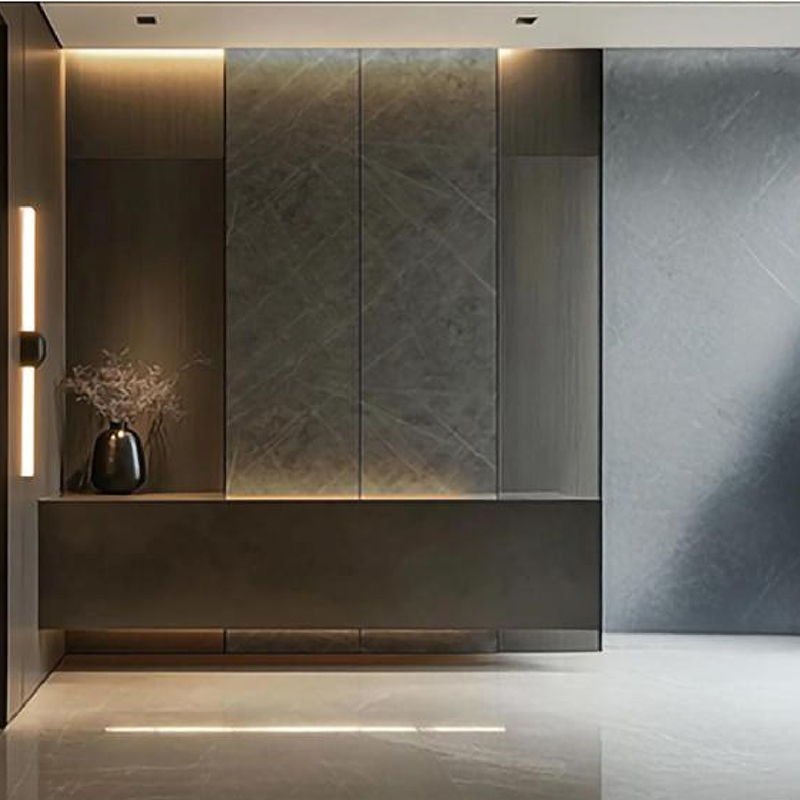
When a hotel project calls for a feature wall that reads as genuine marble, the first decision is often the same: should the surface absorb light or bounce it back? After seeing both finishes in production, the answer is rarely about personal taste. Matte and glossy decorative surfaces behave differently under lighting, daily use, and maintenance, and those differences decide whether the finish still looks acceptable after eighteen months of guest traffic.
For a purchase decision, the practical sequence is: define the lighting, define the wear, and define the cleaning routine. Only then choose a finish.
Matte vs Glossy at a Glance: What Actually Changes
Matte and glossy surfaces are manufactured from the same PET films, UV-coated boards, and cold or hot transfer films you would use for any decorative surface. The distinction is in how the top layer is formulated. A matte surface uses a rougher, light-absorbing relief, while a glossy surface is polished to a mirror-like state that reflects light in a nearly specular pattern.
This difference in reflection has practical consequences. A matte finish hides fine dust and small scratches, but it can look dull in low-light rooms. A glossy finish amplifies color and creates a visual sense of depth, but it amplifies smudges, fingerprints, and every maintenance missed spot.
If you are comparing finishes for wall panels or cabinet doors, remember that gloss index is a measurable quality. Industry films often report a 60-degree gloss value; a matte film might sit around 10 to 20 GU, while a high-gloss film can exceed 90 GU. The higher the gloss, the more you must plan for reflection control and cleaning.
What Defines a Matte Decorative Surface?
Matte finishes are the safer choice in many residential and commercial environments. Because they scatter light instead of reflecting it, they reduce glare on large background walls and make small imperfections in the substrate less visible. If the wall panel or cabinet substrate has a minor dent or a slightly uneven seam, a matte film will not highlight it as aggressively as a glossy version.
In terms of maintenance, matte surfaces are forgiving. They do not show water marks as quickly, and they resist the oily fingerprint pattern that plagues glossy kitchen cabinet doors. On the other hand, matte surfaces can be difficult to clean if a stain is allowed to sit, because the slight texture can trap residue. A soft microfiber cloth and a mild cleaner are usually enough.
For furniture and cabinetry, matte transfer films are often used in contemporary or Scandinavian-inspired designs. They produce a calm, quiet look that works well with natural wood tones and muted color palettes. If you are specifying a film for a bedroom wardrobe or a study cabinet, a matte cold transfer film can give a consistent, non-reflective surface that does not compete with ambient light.
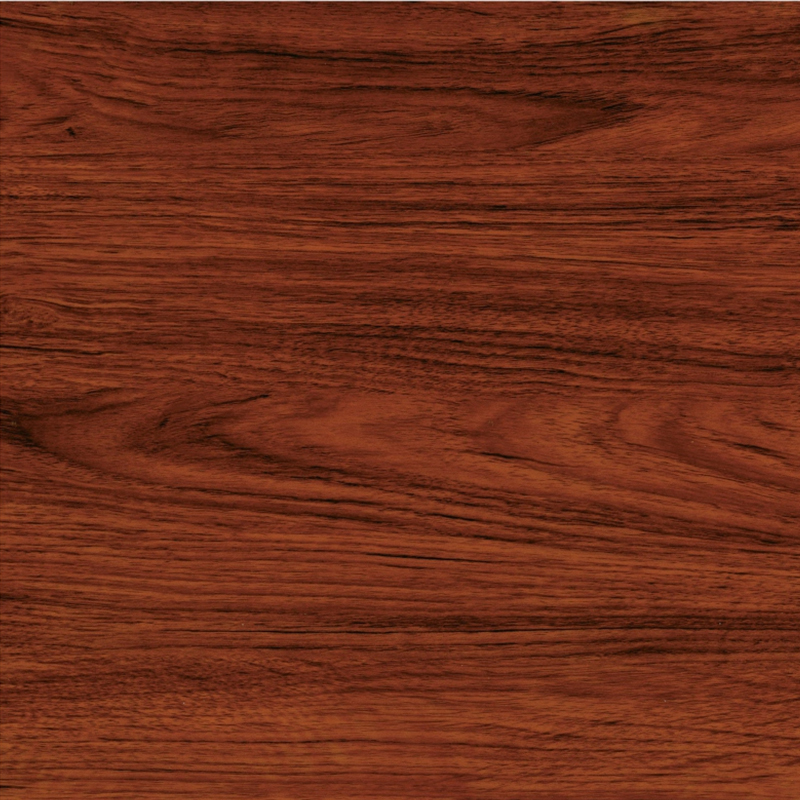 Tarot Gray Scratch-Resistant PET Cold Transfer Film for Bedroom WallsThis film combines a realistic rosewood texture with a matte finish, making it ideal for bedrooms or study areas. Its moisture-resistant and durable properties suit humid environments, while the self-adhesive design simplifies installation.View Product →
What Defines a Glossy Decorative Surface?
A glossy surface is the right tool when you need maximum visual impact. The polished top layer reflects the room around it, which can make a small or dark space feel larger and brighter. In display areas like hotel lobbies, office reception counters, or commercial showrooms, a glossy marble or gold-vein pattern can draw attention and create a level of sophistication that a matte finish sometimes lacks.
But the gloss that enhances light also enhances the visibility of every smudge, scratch, and water droplet. On a high-gloss cabinet front, a child's handprint or a splash from the sink will be immediately noticeable. The surface requires a more deliberate cleaning routine, and the choice of transferred film matters: a high-quality glossy PET film with a hard, scratch-resistant coating will hold up better than one that considers the glossy look a simple visual property.
In practice, glossy finishes are also more sensitive to substrate flatness. If the board underneath has a telegraphing texture or an uneven joint, the high light reflection will reveal it. In a hotel background wall where the lighting strip is installed close to the surface, this is the most common issue we see in the field.
 New Jazz White Waterproof Mirror Gloss Heat Transfer FilmInspired by diamond patterns, this glossy film adds a crystalline sheen to home appliance panels. With excellent waterproofing and scratch resistance, it maintains a lustrous finish even with frequent cleaning.View Product →
Key Differences That Affect a Purchase Decision
Beyond appearance, the differences that drive cost and risk are gloss level, scratch resistance, maintenance, and color rendering. A matte surface tends to lower reflected glare and hide small mechanical damages. A glossy surface enhances color saturation and contrast, but requires a lower-volume reflective environment.
Start with gloss level as your first filter. In a bathroom or kitchen backsplash, a gloss finish gives the room a clean, wet look, while a matte finish offers a more natural stone feel. In a bedroom wall, matte is usually better because of how ambient light falls on a large surface. In a TV background wall, the choice depends on whether you want the wall to disappear or become the focal point.
Scratch resistance is another parameter with a direct tolerance. PET transfer films with a UV-cured topcoat can resist marring, but the coating's hardness is not infinite. As explained in our guide on UV varnish printing, the topcoat is what gives a film its finished gloss and its resistance profile. A matte film with a harder topcoat often performs better in high-traffic areas than a glossy film without one. Always check the film's pencil hardness and any scratch-resistance claims before signing off.
Glossy surfaces are easier to wipe clean than matte surfaces, because there is no texture to catch residue. However, the same gloss makes any missed streak visible. In a commercial lobby with continuous foot traffic, a matte floor or wall can look cleaner longer, but it may require periodic deep cleaning to keep the surface appearance uniform.
How to Choose by Application Area
Each space in a building imposes its own rules. In kitchens, the winning finish usually depends on whether the surface is near a sink or a cooking zone. Near a sink, a high-gloss finish wipes clean easily, but water spots form quickly; a matte finish resists water spots but can stain if oil is left. For kitchen cabinets, we recommend a matte finish with a stain-resistant, oil-resistant topcoat, or a glossy finish that you are willing to wipe down after every meal prep.
In bathrooms, a glossy tile or panel reflects light and creates a bright, airy feel. But if the room has limited natural light and a high humidity level, a glossy surface can develop condensation that looks messy. Matte surfaces are less likely to show condensation, but they can look damp in a dim room. A practical compromise is to use a matte finish on the walls and a high-gloss finish on a narrower accent strip.
In bedrooms and living rooms, matte is usually the default. The human eye is sensitive to glare on a wall facing a window or a ceiling light. A matte background wall softens the light and lets furniture colors stay true. For a TV background wall, glossy should be avoided unless you can control the viewing angle and decorative lighting.
For commercial spaces, the decision often ties to brand positioning. An office or hotel lobby that wants a statement feel will benefit from glossy decorative surfaces on a focal wall, while a long corridor or a meeting room will be better served by a matte finish to reduce reflection on large surfaces.
If you are working with UV marble sheets for that kind of commercial or residential wall cladding, the product card below points to a high-gloss, easy-clean UV-coated marble panel for living room TV backgrounds.
 Easy-Clean UV Coated Marble Panel for Living Room TV WallsCrafted from stone powder and PVC resin, this panel offers a natural marble look with a stain-resistant UV coating. It is durable, eco-friendly, and simple to install, making it suitable for feature walls in residential and commercial spaces.View Product →
Common Mistakes When Choosing a Finish
The first mistake is selecting a finish based only on a sample under store lighting. A glossy sample may look dramatic in a bright showroom but become impossible to control in a dim room with LED strips. The second is ignoring the substrate. With a hot-stamping foil or cold-peel film, the surface must be flat, clean, and free of telegraphing; a high-gloss film will show every seam. A third mistake is treating scratch resistance as an optional add-on. In furniture and cabinetry, the finish will rub against clothing, tools, and cleaning equipment every day.
To avoid these errors, build a simple decision tree:
- Define the maintenance standard first.
- Define how light falls on the surface and whether you can control reflections.
- Define the substrate flatness tolerance.
- Then choose the finish.
Frequently Asked Questions
Q1: Is matte or glossy better for hiding scratches?
Matte is better. The rough surface scatters light, so a fine scratch is less obvious. A glossy surface reflects light in a sharp pattern, and any defect can appear as a bright line.
Q2: Which finish is easier to clean?
Glossy surfaces are easier to wipe because they have no micro-texture to trap dirt. However, the cleaning must be done consistently, since every streak is visible. Matte surfaces need less frequent cleaning, but if a stain gets embedded in the texture, it may require more effort.
Q3: Can I mix matte and glossy decorative surfaces in one room?
Yes. In fact, mixing finishes is a common interior design technique. Use a matte finish on large walls to create a calm base, and add a glossy finish on furniture, accents, or a TV background wall to draw attention.
Q4: Does the finish affect product cost?
Not inherently. The cost is more driven by the base film, the coating quality, and the complexity of the pattern. A high-gloss film with a scratch-resistant topcoat can be more expensive than a basic matte film, but the finish itself is not the only cost factor.
Choose a finish the way you would choose a material: from the lighting and usage you expect, not from beauty alone. A matte decorative surface brings calmness and resilience to everyday areas; a glossy surface gives you depth and visibility where you need a statement. With the right film or panel, both finishes can last through years of use without losing their character.
Once you have defined the lighting, wear, and cleaning plan, the choice becomes straightforward.