English
 Español
 عربى
عربى

The Design Logic Behind Fluted Surface Geometry in Contemporary Interiors
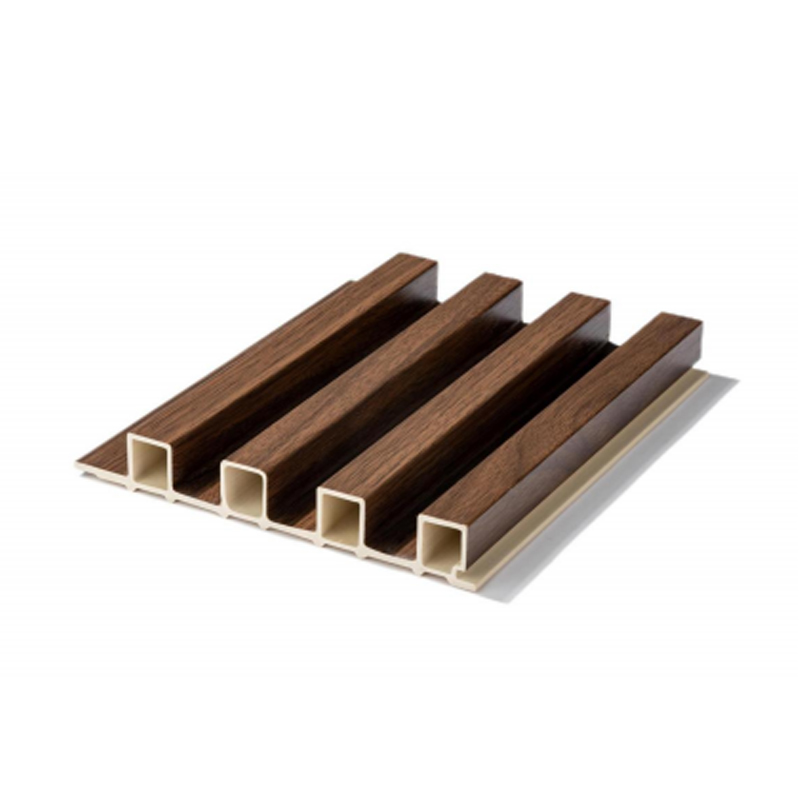
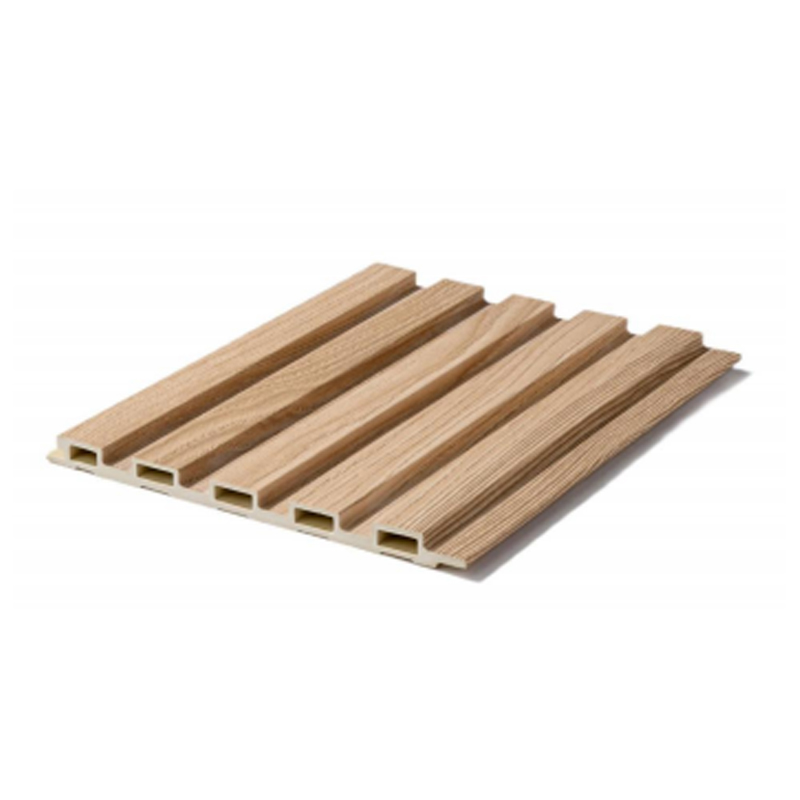
Fluted surface profiles have appeared in architectural history across vastly different periods and cultural contexts — from the columns of ancient Greek temples to the Art Deco facades of 1930s commercial buildings — but their current dominance in residential and hospitality interior design is driven by a specific set of contemporary aesthetic priorities. The primary function of fluted wall panels in modern interiors is not structural but perceptual: the regular alternation of ridges and grooves generates controlled shadow lines that give a flat wall surface visual weight, depth, and a sense of tactile presence that smooth surfaces cannot replicate.
This shadow-line effect is strongly dependent on lighting direction. Under ambient ceiling light, fluted panels read as a subtle texture. Under directional accent lighting — wall-grazing fixtures positioned to rake light across the surface at a low angle — the contrast between lit ridges and shadowed grooves intensifies dramatically, producing a result that changes character throughout the day as natural light angles shift. Interior designers working with fluted feature walls often specify lighting in deliberate coordination with panel geometry to exploit this property, treating the wall surface as an active element in the room's lighting design rather than a passive backdrop.
The vertical orientation of flute lines reinforces perceived ceiling height in rooms with standard or below-standard floor-to-ceiling dimensions — a well-documented optical effect that explains why fluted panels are particularly prevalent in apartment-scale residential renovations where structural constraints limit actual ceiling height. Horizontal flute orientations, less common but increasingly specified in commercial settings, produce the opposite effect, visually widening narrower corridor and alcove spaces.
Material Substrates for Fluted Panels: Performance Trade-offs Across Product Types
Fluted wall panels are produced across several distinct material platforms, each with a different balance of performance properties, processing characteristics, and cost profile. The correct substrate selection depends on the installation environment, the required surface finish, and the structural demands of the specific application.
WPC fluted panels — manufactured from wood-plastic composite — represent the dominant product type in the mid-to-premium residential market. The composite matrix combines wood fiber or bamboo fiber with thermoplastic resin, producing a panel that replicates the warmth and grain character of timber while substantially outperforming solid wood on moisture resistance and dimensional stability. WPC panels do not swell, warp, or crack under humidity cycling, making them appropriate for installation in spaces that solid wood cannot reliably serve — bathrooms, laundry rooms, covered outdoor transition zones, and ground-floor applications in high-humidity climates.
PVC-based fluted panels occupy a lower price point with equivalent moisture resistance but a somewhat different aesthetic register — the surface finish tends toward higher gloss and the substrate lacks the organic fiber component that gives WPC its wood-like tactile quality. Bamboo-wood fiber composite panels, a distinct category from standard WPC, use a finer fiber fraction that produces a smoother surface profile, better suited to fine-pitch flute geometries where the groove definition needs to remain crisp at smaller dimensions.
Solid wood fluted panels remain specified for high-end residential joinery and luxury hospitality projects where the authenticity of natural timber grain is a non-negotiable design requirement. Their installation is limited to climate-controlled, low-humidity environments, and ongoing maintenance expectations — periodic re-oiling or refinishing — need to be communicated clearly to end users at the specification stage. Haining Keler Decoration Materials Co., Ltd. approaches this multi-substrate landscape through its decorative film technology, enabling consistent pattern and finish quality to be applied across different substrate types within a unified product family.
Acoustic Properties of Fluted Wall Panels: What the Research Actually Shows
Sound insulation and noise reduction are frequently cited in product descriptions for wood plastic composite panel wall cladding, but the acoustic mechanisms involved are worth understanding precisely, as they differ from what many buyers expect. Fluted wall panels do not provide significant airborne sound insulation — that is, they do not meaningfully reduce sound transmission through a wall from one room to an adjacent space. Sound insulation of that type is a function of mass and decoupling, requiring dense, heavy constructions that a surface cladding layer alone cannot achieve.
What fluted panels do contribute, measurably, is room acoustic improvement through sound diffusion and absorption. The three-dimensional surface profile of a fluted wall scatters incident sound waves rather than reflecting them coherently, which reduces flutter echo and the buildup of standing waves in rectangular rooms. This effect is acoustically equivalent to what purpose-built diffuser panels achieve in recording studios and concert halls, applied within a decorative context. In living rooms, dining areas, and open-plan commercial spaces — environments where speech intelligibility and ambient noise comfort are relevant — this diffusion effect produces a perceptible improvement in acoustic quality.
When fluted panels are installed with a backing layer of acoustic insulation material — mineral wool or foam — between the panel and the structural wall, the combined system achieves meaningful sound absorption across the mid-frequency range (500 Hz to 2,000 Hz), the bandwidth most relevant to human speech. Specifiers seeking quantified acoustic performance should request Noise Reduction Coefficient (NRC) data from manufacturers for the specific panel-plus-backing system configuration they intend to install, rather than for the panel substrate alone.
Application Contexts and Installation Details That Determine Long-Term Outcomes
The versatility of grooved wall decor panels across residential and commercial applications creates a corresponding range of installation conditions, and the details that matter most vary significantly by context. Feature walls in living rooms and bedrooms — the highest-volume residential application — are primarily a dry, stable environment where the main installation variables are panel alignment, joint treatment, and the management of transitions at corners, door frames, and ceiling lines.
Corner detailing is where most installation quality problems originate. External corners can be handled with mitred panel edges, purpose-made aluminum corner trim, or deliberate reveal gaps — each approach has a distinct visual outcome and a different tolerance for installer precision. Mitred joints on fluted profiles require accurate angle cutting and tight fit to avoid visible gaps between the mating surfaces; aluminum trim is more forgiving of dimensional variation but introduces a visual element that needs to be compatible with the overall design language. Specifiers working on projects with high corner-count layouts should address the corner treatment method explicitly in the material specification rather than leaving it to installer discretion.
For commercial applications — retail environments, restaurant interiors, hotel corridors — impact resistance and cleanability become primary performance criteria alongside aesthetics. High-footfall zones at dado height are particularly vulnerable to trolley and furniture impact, and the flute geometry, while visually appealing, can trap particulate soiling in groove recesses if the surface finish is not adequately non-porous. Zhe Keler's transfer film surface technology addresses this directly: the film layer creates a sealed surface across both ridge and groove geometry, preventing soiling penetration and allowing groove recesses to be cleaned with standard damp-wipe maintenance procedures without risk of surface damage.
Ceiling applications, which represent a growing specification category in both residential and commercial contexts, place distinct demands on panel fixing systems. Panel weight, deflection under span, and the long-term performance of adhesive or mechanical fixing methods under gravity loading all require verification against the specific panel product and ceiling substrate combination being used. Direct adhesive fixing to plasterboard is adequate for lightweight PVC panels over short spans; heavier WPC panels on longer ceiling spans typically require mechanical fixing to a substrate framing system to ensure long-term positional stability.