English
 Español
 عربى
عربى

The Shifting Landscape of Interior Wall Decoration
Interior wall decoration has moved far beyond paint and plain drywall. Designers, contractors, and homeowners increasingly look for surface materials that combine visual richness with practical durability. Among the fastest-growing categories are the uv marble sheet, the fluted wall panel, and the marble-patterned pet heat transfer film. Each of these solutions addresses a distinct pain point in architectural finishes: surface protection, dimensional texture, and cost-efficient replication of natural stone patterns.
Renovation cycles have also accelerated. Commercial interiors are refreshed every five to eight years on average, while residential remodeling driven by resale value now happens on a similarly tight timeline. This turnover pressure pushes specifiers toward materials that install faster, resist moisture better, and require minimal maintenance compared with traditional stone, tile, or wet-applied finishes.
This article walks through the technical characteristics, application logic, and comparative performance of these surface decoration systems, along with a look at laminate countertop adhesive as the bonding layer that often determines whether a lamination project succeeds or fails over time.
UV Marble Sheet: Engineered Hardness for High-Traffic Surfaces
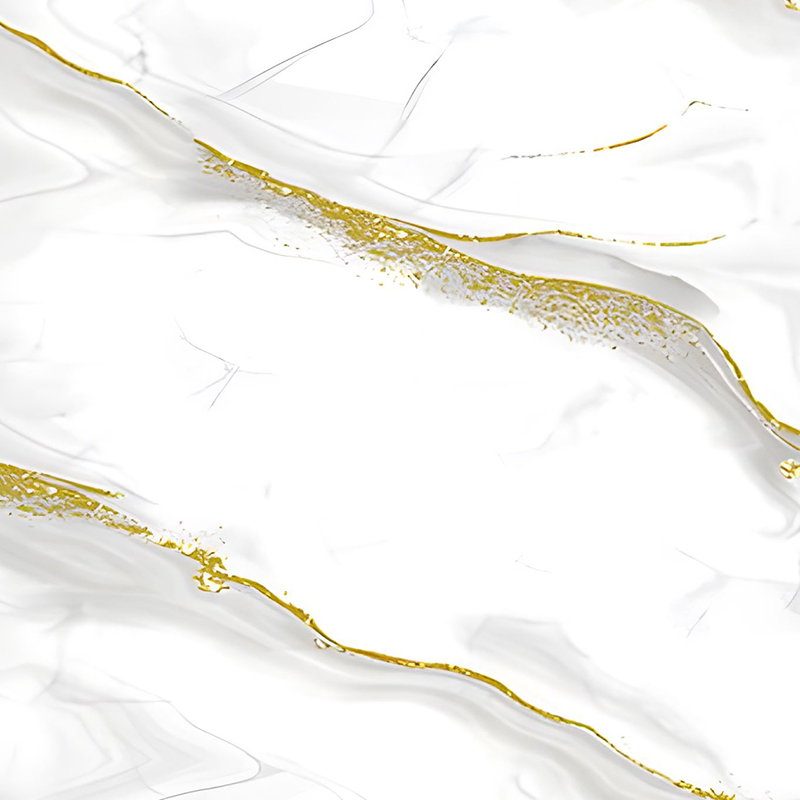
A uv marble sheet is produced by applying a UV-cured coating layer over a printed or textured base panel, then curing it instantly under ultraviolet light. This process creates a hard, glossy, scratch-resistant top layer without the extended drying time associated with conventional lacquer finishes. Because the coating cures almost immediately, production lines can apply consistent thickness across large panel runs, which keeps sheen and color uniform from batch to batch.
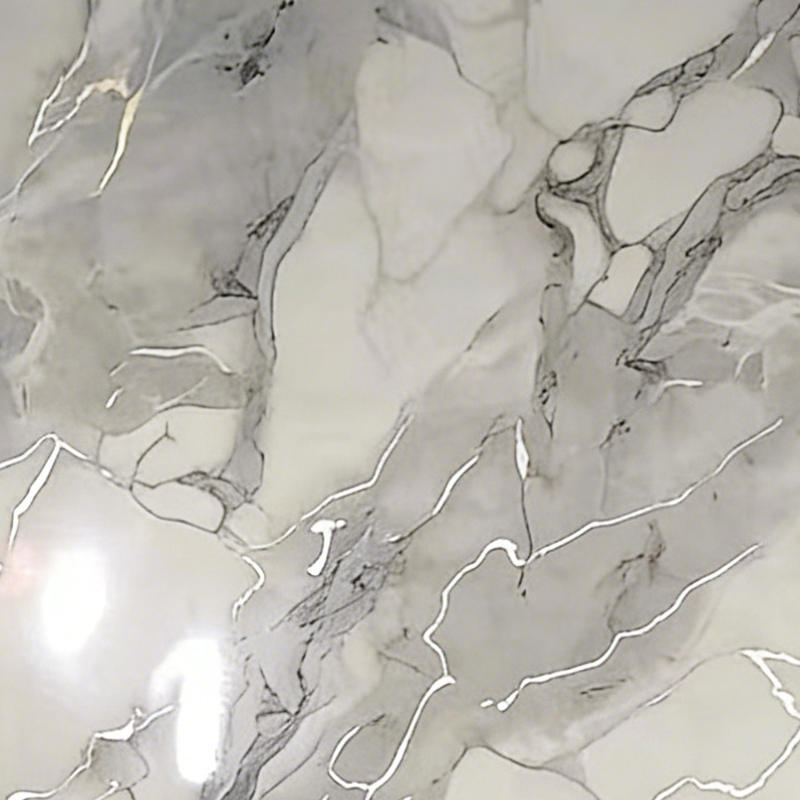
A UV marble sheet panel showing a high-gloss, veined marble pattern finish suited for wall cladding and furniture surfaces.
In practical terms, this matters most in areas subject to frequent contact: reception walls, kitchen backsplashes, elevator lobbies, and retail counters. Surface hardness translates directly into fewer visible scuffs after years of cleaning and incidental impact. The chart below illustrates relative surface hardness on a common pencil-hardness scale, comparing a UV marble sheet against a natural stone veneer, a standard PVC decorative panel, and a painted gypsum board.
Beyond hardness, the UV coating also acts as a barrier against ultraviolet fading, which is why these sheets hold their color consistency in sun-exposed lobbies and storefronts far longer than uncoated printed panels. Installers commonly pair UV marble sheets with aluminum composite or high-density fiberboard substrates, allowing the panel to be cut, routed, and edge-banded using standard woodworking tools.
Fluted Wall Panel: Bringing Dimensional Texture to Flat Interiors
The fluted wall panel category has grown steadily because it solves a problem that flat laminate and paint cannot: three-dimensional shadow lines. The repeated vertical or horizontal grooves catch light differently depending on viewing angle, giving otherwise plain walls a sense of depth without structural remodeling.
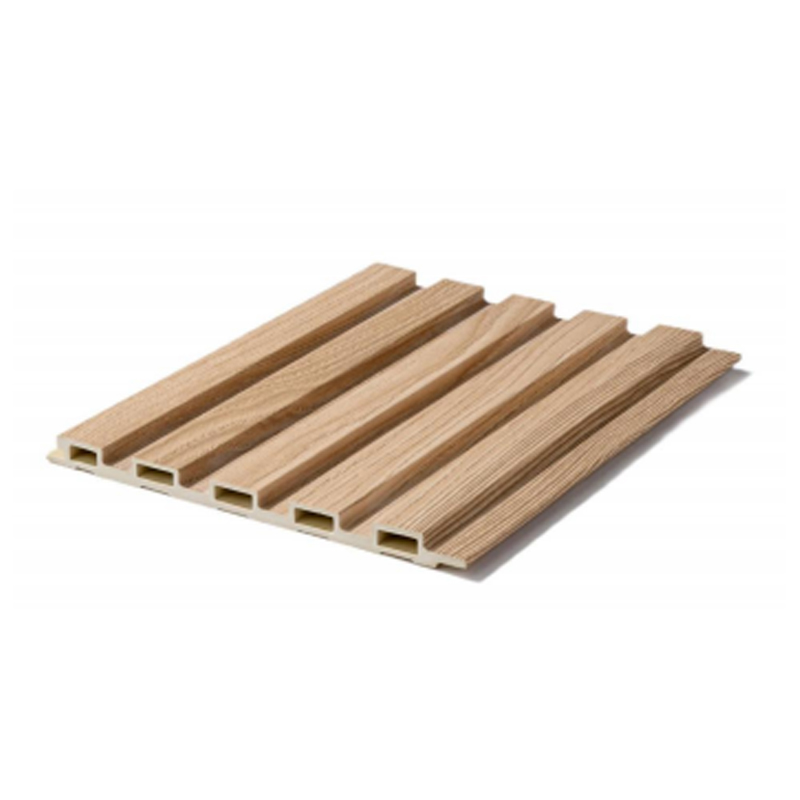
Fluted wall panels create repeated vertical grooves that add texture and shadow depth to flat interior surfaces.
Adoption of fluted panels in commercial interior design has accelerated markedly over the past several years, moving from a niche boutique-retail treatment to a mainstream option in offices, hospitality lobbies, and residential feature walls. The line chart below traces estimated adoption share among newly specified commercial interior wall treatments.
Two practical drivers explain this growth. First, fluted panels made from wood-plastic composite or PVC cores are largely moisture stable, which allows them to be specified in kitchens, bathrooms, and humid climates where solid wood slats would warp. Second, groove profiles hide seam lines between panels far more effectively than flat sheets, which reduces the visible impact of minor substrate irregularities during installation.
Marble-Patterned PET Heat Transfer Film: Replicating Stone Without the Weight
The marble-patterned pet heat transfer film is a thin carrier film printed with a marble vein pattern that is transferred onto a substrate under heat and pressure, then released to leave the pattern permanently bonded to the surface. This technique allows manufacturers to reproduce intricate stone veining on lightweight substrates such as MDF, aluminum profiles, or PVC, avoiding the weight and cost of quarried stone entirely.
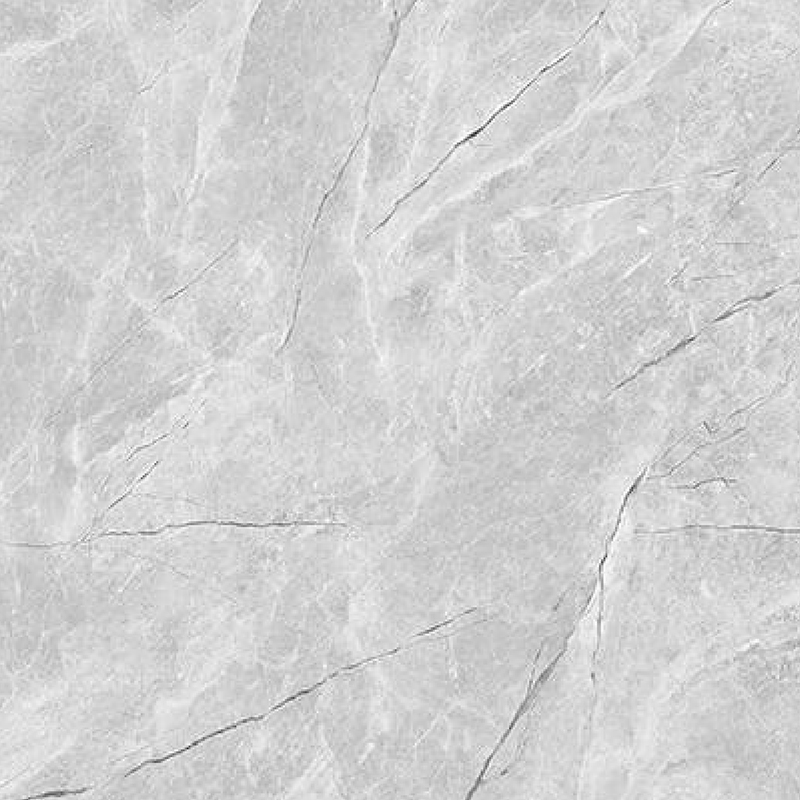
A marble-patterned PET heat transfer film sample showing detailed vein reproduction achievable through hot stamping transfer.
The transfer process itself follows a controlled sequence that determines final pattern fidelity and adhesion strength. The flowchart below outlines the typical production steps from raw substrate to finished decorative panel.
Because the film layer is thin, panels finished with marble-patterned PET film remain considerably lighter than stone-veneered equivalents, which reduces structural loading on partition walls and simplifies handling on site. This makes the material particularly relevant for retrofit projects where existing wall structures cannot support heavier cladding.
Laminate Countertop Adhesive: The Hidden Layer That Determines Longevity
Every lamination system, whether it involves UV-coated sheets, transfer films, or fluted panel veneers, depends on a bonding layer that most end users never see. Laminate countertop adhesive is formulated to maintain a permanent, moisture-resistant bond between a decorative laminate surface and its substrate, typically particleboard, plywood, or MDF, under conditions of repeated heat exposure, moisture contact, and mechanical stress.
Poor adhesive selection is one of the most common causes of premature failure in laminated surfaces, showing up as edge lifting, bubbling, or delamination near sinks and heat sources. The bar chart below compares moisture resistance ratings across the four material systems discussed in this article, reflecting how well each performs when exposed to sustained humidity or direct water contact.
Adhesive chemistry also affects installation workflow. Contact-type adhesives require open time management and precise panel alignment on first contact, while reactive adhesives offer longer working time but need clamping pressure during curing. Fabricators working with laminate countertop adhesive on kitchen and bath projects typically favor formulations rated for continuous moisture exposure, since sink cutouts and backsplash edges see the highest cumulative water contact over a surface's service life.
Comparative Performance Across Five Practical Dimensions
Choosing between these materials rarely comes down to a single metric. Specifiers typically weigh durability, design flexibility, installation ease, moisture resistance, and cost efficiency together, since a material that scores well on one dimension may trade off against another. The radar chart below plots the three primary decorative surface systems across these five dimensions on a 0 to 10 scale.
The pattern that emerges is instructive: UV marble sheets lead on durability and moisture resistance, fluted panels lead on design flexibility because of their sculptural texture, and PET marble film leads on cost efficiency and installation speed since it avoids the added thickness and machining requirements of coated or textured panels.
Technical Snapshot: Comparing Core Specifications
The table below summarizes typical construction characteristics for each material system, useful as a quick reference when narrowing down options for a specific renovation scope.
| Material System | Typical Thickness | Core Substrate | Primary Application |
|---|---|---|---|
| UV Marble Sheet | 3 to 18 mm | MDF, aluminum composite | Backsplashes, feature walls, countertops |
| Fluted Wall Panel | 9 to 25 mm | WPC, PVC, solid wood veneer | Feature walls, partitions, ceiling accents |
| PET Marble Film Panel | 0.05 to 0.15 mm film on substrate | MDF, aluminum profile, PVC | Furniture surfaces, door skins, trim |
| Laminate with Countertop Adhesive | 0.6 to 1.2 mm laminate layer | Particleboard, plywood, MDF | Countertops, cabinetry, worksurfaces |
Moisture-resistant lamination performs best when substrate selection, adhesive chemistry, and finish layer are matched as a system, rather than chosen independently.
Installation Considerations for Renovation and New-Build Projects
Successful surface decoration outcomes depend on planning that extends beyond material selection. The following factors consistently affect long-term performance across interior wall cladding and architectural finish projects:
- Substrate moisture content should be verified before panel installation, since trapped moisture behind a sealed decorative surface can cause delamination over time.
- Thermal expansion gaps are necessary around fluted wall panel installations spanning large wall sections, particularly in climates with wide seasonal temperature swings.
- Edge sealing on UV marble sheet cutouts, such as sink openings, prevents water intrusion at the most vulnerable point of a finished surface.
- Surface cleanliness and temperature control during PET film transfer directly affect final pattern adhesion and the absence of visible bubbling.
- Adhesive open time should match ambient workshop conditions, since humidity and temperature both alter working time for laminate countertop adhesive.
Modern Interior Design Applications
Interior designers increasingly combine these systems within a single project rather than treating them as competing choices. A common approach pairs a fluted wall panel as a textured feature wall with UV marble sheet countertops for continuity of tone, while marble-patterned PET film is used on cabinetry doors to echo the stone pattern at a lower material cost. This layered approach allows a cohesive design language across a space without concentrating budget entirely on one high-cost material.
Moisture Resistance and Long-Term Maintenance
Moisture resistant lamination is not solely about surface waterproofing; it also concerns how a material's internal structure responds to sustained humidity. Panels with closed-cell or composite cores resist swelling far better than raw particleboard, which is why kitchen and bathroom specifications increasingly favor WPC-core fluted panels and UV-coated sheets over uncoated wood-based alternatives.
Maintenance requirements also differ meaningfully. UV-coated surfaces typically require only routine wiping, since the cured coating resists staining from common household liquids. Fluted panels with grooved profiles need slightly more attention to dust accumulation within the channels, though this is a minor consideration relative to the visual benefit of dimensional texture. PET film-finished surfaces perform comparably to painted or laminated surfaces in daily cleaning, provided the transfer bond was executed correctly during production.
Frequently Asked Questions
Q1: What makes UV marble sheet different from a standard printed decorative panel?
The defining difference is the UV-cured top coating, which is hardened almost instantly under ultraviolet light to create a scratch-resistant, glossy surface layer. A standard printed panel without this coating typically relies on a thinner protective film that offers less resistance to abrasion and fading over time.
Q2: Can fluted wall panels be installed in bathrooms or other humid areas?
Fluted wall panels built on WPC or PVC cores are generally suitable for humid environments because these cores resist swelling and warping. Solid wood veneer versions require more careful moisture management and are usually better suited to drier interior spaces.
Q3: How durable is a surface finished with marble-patterned PET heat transfer film compared with real stone veneer?
A PET film finish will not match the absolute hardness of natural stone, but it offers strong resistance to everyday wear when properly bonded, along with significantly lower weight and easier handling during installation, which often outweighs the difference for furniture and trim applications.
Q4: What role does laminate countertop adhesive play in preventing delamination?
The adhesive layer maintains continuous contact between the decorative laminate and its substrate under stress from heat, moisture, and mechanical load. An adhesive mismatched to the application, such as one without adequate moisture resistance near a sink, is a leading cause of edge lifting and bubbling over time.
Q5: Which material offers the best balance of cost and design flexibility for a feature wall?
Fluted wall panels generally offer the strongest design flexibility due to their dimensional texture, while marble-patterned PET film offers the most cost-efficient route to a realistic stone appearance. The right choice depends on whether the priority is tactile texture or pattern realism within a given budget.